
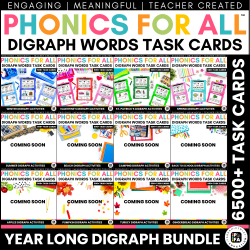
Finding effective spring digraph word activities that actually keep Kindergarten, 1st Grade, and 2nd Grade students engaged can feel harder than it should be—especially this time of year when attention spans are short and energy is high. If you’re tired of scrambling for meaningful phonics practice that fits into your day, this resource was created with you in mind.
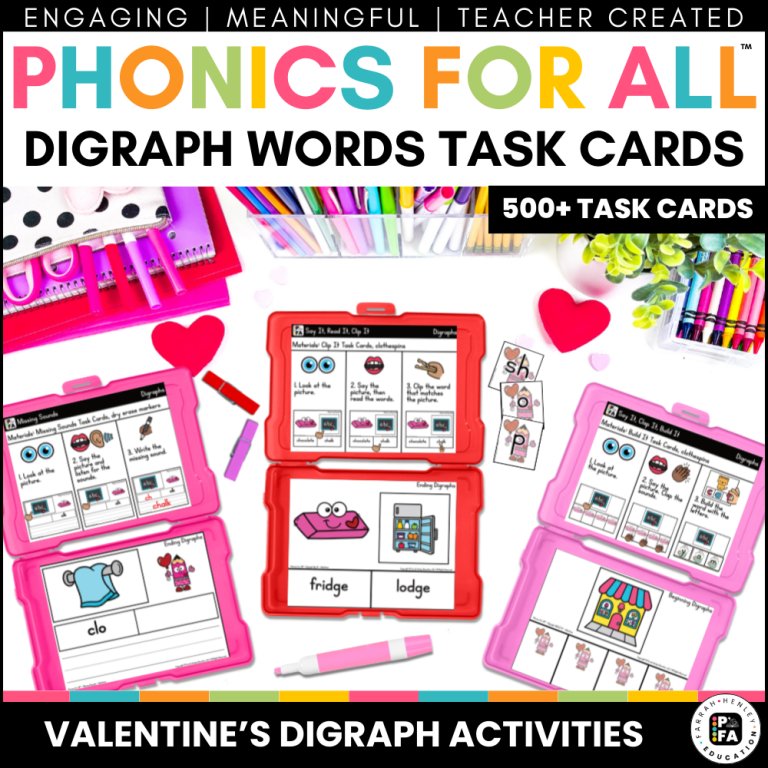
These spring digraph word activities are designed to help students confidently practice and reinforce digraph sounds through hands-on, skill-focused task cards and task boxes. With over 500 spring-themed activities, students work on identifying, decoding, encoding, and applying digraph words in a way that feels fun but stays grounded in strong phonics instruction.
Perfect for literacy centers, small groups, independent work, or phonics intervention, these low-prep spring digraph word activities save planning time while delivering high-impact learning. Every task card is teacher-created, Science of Reading aligned, and intentionally structured to help digraph skills truly stick—without busywork or guesswork.
✨ What’s Included:
✅ Perfect For…
✅ Benefits for Students
♟️Game Styles Included
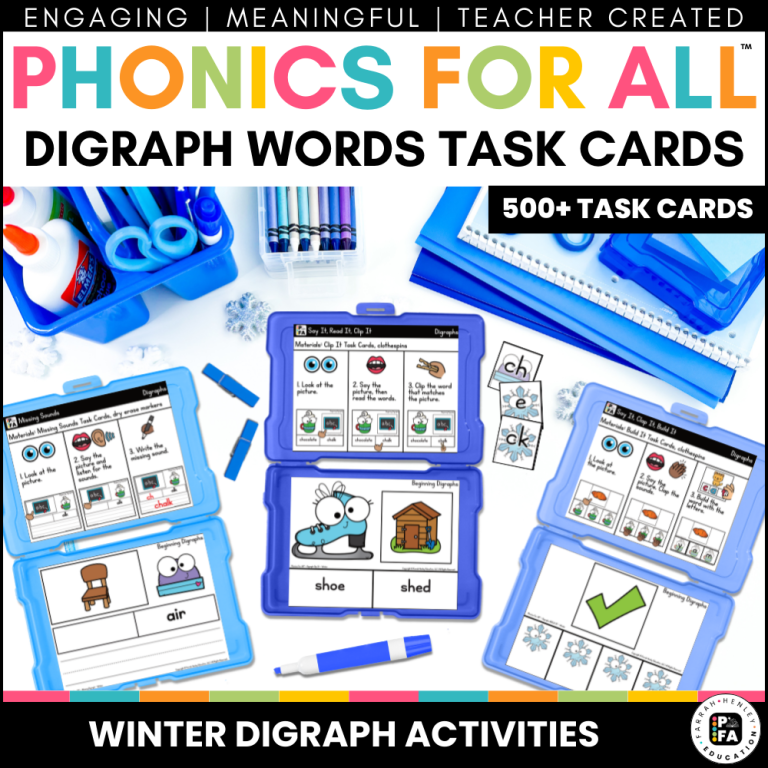
Game 1: Say It, Read It, Clip It
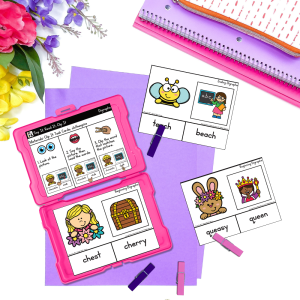
Students look at a picture, say the word, read two Digraph words, and clip the word that matches the picture.
Game 2: Say It, Clap It, Build It
Students say the picture name, clap each sound they hear, then build the word using the included letter tiles or plastic letter manipulatives.
Game 3: Missing Sounds
Students say the picture name and write the missing beginning or ending sound to complete the Digraph word.
💁🏽 Why K–2 Teachers Should Buy This Bundle
💡 How to Use This Resource:
🧠 The Pedagogy: Why It Works
This resource is built upon the foundation of hands-on activities, a cornerstone of effective early literacy instruction. We believe that students learn best when they are actively involved, manipulating materials, and making connections between sounds and letters. By providing tactile and visual learning experiences, these digraph task boxes encourage deeper understanding and retention. This approach transforms abstract phonics concepts into concrete, accessible learning opportunities. It empowers students to take ownership of their learning journey and build a strong, lasting foundation in reading and spelling, aligning perfectly with the principles of the science of reading.
📚 Learning Objectives
🎯 Standards Alignment
FREQUENTLY ASKED QUESTIONS
Are these phonics activities included in your other YEAR-LONG CENTER BUNDLES (Volume 1, 2, or 3)?
Nope! These are totally different, brand-new phonics task cards aligned to the science of reading best practice and perfect to support your phonics instruction.
Can my students use these centers independently?
We pride ourselves on building our activities around our Easy Centers Framework™, which includes making them predictable and familiar to students. We use a bank of different activity styles throughout the month (choosing the best one we feel is appropriate for the skill) so that your students become familiar with the activities and have fewer (and some teachers report NONE) questions each time you switchcenters.
Can these activities be used in a digital or virtual classroom?
This particular unit includes printable hands-on games. The teacher can use them on screen, but they are not created in digital format for students to use on online platforms.
Can I use these activities in my online classrooms as teaching material? (Outschool, Online ESL)
YES! We love online teachers, and we authorize our resources to be used BY THE TEACHER during lessons. We don’t allow them to be sent to parents for use outside the online classroom.
I’ve created a simple point system for giving back to loyal customers!
✅ For every $1 (US dollar) you spend, you earn 1 point!
✅ 20 points can be redeemed for $1 (US dollar) on a future purchase!
✅ When you leave feedback (review), you get 5 points!
✅ EASY Points Reward Points can be viewed under My Account.
This means that you effectively get 5% back on everything you buy, plus extra points for feedback. Points are valid for one year and can be used for anything in the store!
Note: Point award system is subject to change. View full terms here.
Are you needing this resource for more than one teacher or classroom?
This is a common occurrence among teachers, especially if you are part of a teaching team or grade-level team. In order to make it easy, and legal, for you to share with your team, each team member must set up their own account and purchase a license for their classroom. If you are interested in getting a grade-level license, please reach out to support@farrahhenley.com for grade-level pricing. Thank you for being a responsible teacher buyer!
Copyright © Farrah Henley Education, LLC. All rights reserved by the author. This product is to be used by the original downloader only. Copying for more than one teacher, classroom, department, school, or school system is prohibited. This product may not be distributed or displayed digitally for public view. Failure to comply is a copyright infringement and a violation of the Digital Millennium Copyright Act (DMCA). Clipart and elements found in this PDF are copyrighted and cannot be extracted and used outside of this file without permission or license. Intended for classroom and personal use ONLY.
 Loading...
Only logged in customers who have purchased this product may leave a review.
 Spring Digraph Words Activities Task Cards Phonics Games Task Boxes K-2nd

Hey y'all, I'm Farrah
I spent 25 years teaching Preschool through 5th grade. Every resource in this shop is one I would use in my own classroom, and every one is covered by our No AI Guarantee.
Read my storyAre you looking for something specific? Need a particular product or help with a teaching strategy? You are in the right place!




 Reload document
  Open in new tab


Reviews
There are no reviews yet